Biography
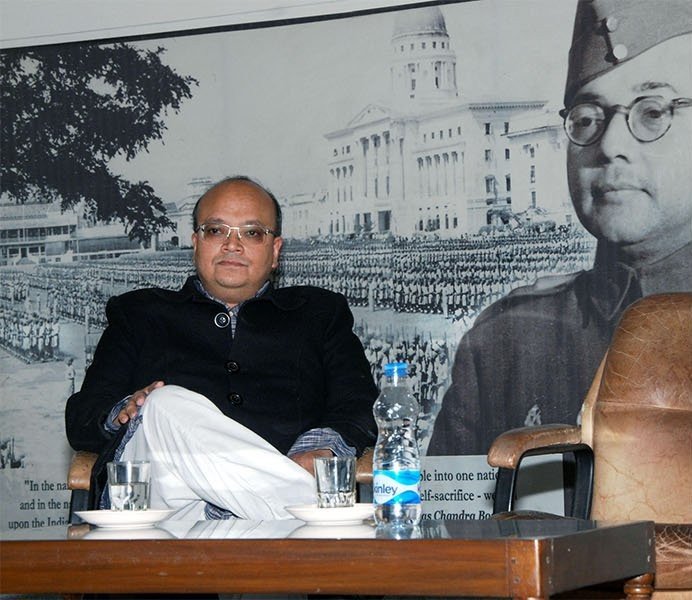
Sumantra Bose is a globally known political scientist who works on the intersections of nationalism, democracy and conflict in the Indian subcontinent, the Balkans region of Europe, and the Middle East. He is a prolific author and active media commentator.
- Home
- /
- Biography
BIOGRAPHY
Sumantra Bose
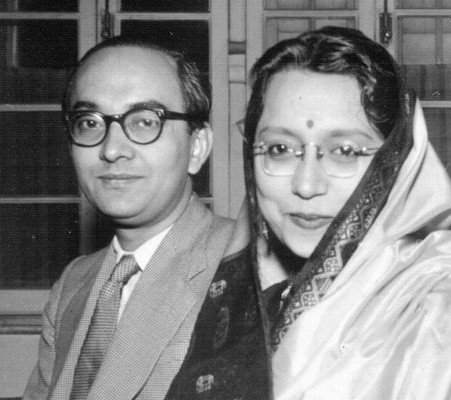
Sumantra Bose was born in Calcutta (now Kolkata), India on 7 June 1968 to Sisir Kumar Bose, a doctor, and Krishna Bose, a professor and writer.
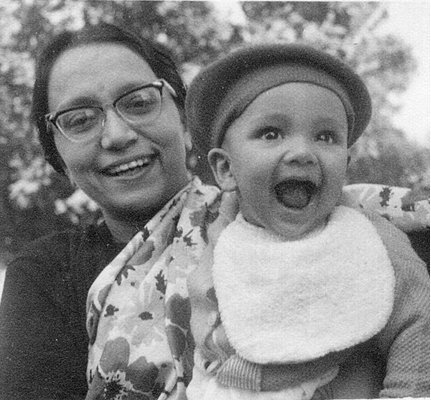

He grew up in Calcutta, where he studied for twelve years at the St. Xavier’s Collegiate School.

In the late 1980s, he went to the United States for higher studies. In May 1992, he graduated from Amherst College, Massachusetts, with a summa cum laude (highest honours), and was elected to the US’s national academic honours society, Phi Beta Kappa. Sumantra majored in political science at Amherst, with informal minors in history and economics. His senior honours thesis was awarded the Densmore Berry Collins Prize for the best thesis in political science.
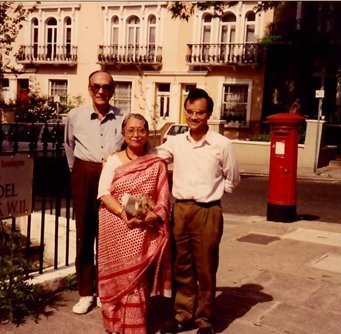
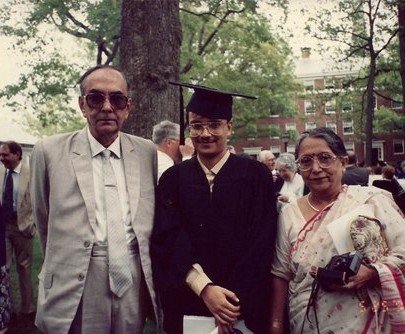

In September 1992, Sumantra entered the PhD programme in political science at Columbia University, New York. As a graduate student at Columbia, Sumantra was successively Faculty Fellow (1992-1994), President’s Fellow (1994-1995), and Lindt Fellow (1997-1998). From 1995 to 1997, he held a Fellowship in International Peace and Security awarded by the Social Science Research Council (SSRC) and the MacArthur Foundation.
Sumantra earned M.A. (1994) and MPhil degrees at Columbia, and received the PhD in political science in 1998. At Columbia, his primary field was Comparative Politics, and his secondary field was Political Theory, with a third field in Research Methods.
In 1998-1999, Sumantra taught for a year as an assistant professor of political science at Wellesley College, Massachusetts. In autumn 1999, he moved to London and joined the London School of Economics and Political Science (LSE) as The Ralf Dahrendorf Fellow in Comparative Politics.
He had already lived in London and studied at LSE for a year as an undergraduate in its Department of International Relations in 1990-1991, as a junior-year-abroad student from Amherst College (the third of the four undergraduate years at Amherst). In 2001, he was appointed as a permanent Lecturer (Assistant Professor) at LSE, exceptionally with tenure on the basis of outstanding research and teaching performance. In 2003, he was promoted to Reader (advanced Associate Professor) at LSE. In 2006, he was promoted to a Chair (Full Professorship) in International and Comparative Politics at LSE. He held this Chair for the next fourteen years, until autumn 2020. In the early 2020s, he decided to primarily live in and work out of India, where he is currently Professor of International and Comparative Politics at Krea University, established in 2019 and dedicated to bringing a world-class liberal education in the natural sciences, the social sciences, and the humanities to India’s new generation.
Sumantra Bose has published eight sole-authored books, details of which are on the ‘Publications’ page. His scholarly books have been published by the world’s leading university presses: three by Harvard University Press, and one each by Cambridge University Press, Oxford University Press, and Yale University Press. In addition, he has published with major trade publishers such as HarperCollins and Pan Macmillan.
Sumantra Bose’s ninth sole-authored book, India’s Modi Era: Hindu Nationalism and the Remaking of the World’s Largest Democracy, is to be published in 2027. He is currently at work on the tenth, a sequel to his 2007 book Contested Lands: Israel-Palestine, Kashmir, Bosnia, Cyprus, and Sri Lanka, which explored the causes of protracted conflict and the challenges of peaceful resolution in a cross-national, comparative frame. The sequel, to be published in 2028, re-visits these conflict zones—and includes one more, Northern Ireland—twenty years on.
Sumantra is also the editor of his father Dr Sisir Kumar Bose’s (1920-2000) early-life autobiography and memoir, Subhas and Sarat: An Intimate Memoir of the Bose Brothers, published in 2016 by Aleph Book Company, Delhi. He is the translator (from the original Bengali) of his mother Professor Krishna Bose’s (1930-2020) early-life autobiography and memoir, Lost Addresses: A Memoir of India, 1934-1955, published in 2015 by Niyogi Books, Delhi. He is the compiler and editor of a 550-page omnibus volume of his mother Krishna Bose’s articles and essays published between 1951 and 2020: Krishna Bose, Prabandha-Sangraha, 1951-2020 (Ananda Publishers, Kolkata, 2021, in Bengali).
Sumantra Bose has for many years been a regular contributor of op-ed analyses and commentary to top international media websites, particularly the BBC and also Al-Jazeera. He has appeared as an expert commentator on the news and current affairs programmes of numerous leading international media, including the BBC, CNN, Deutsche Welle, NPR, the Canadian Broadcasting Corporation, etc. He is frequently quoted by major international media—in recent years he has been repeatedly quoted on aljazeera.com, bbc.com, cnn.com, and in The Washington Post, The New York Times, The Atlantic and Time magazine, among many other outlets.
For over twenty-five years, Sumantra Bose has given invited lectures and seminars at leading universities, think-tanks and policy forums across the world, particularly in the United States, Europe, the Middle East, and South and South-East Asia. Sumantra’s research has been supported by numerous major grants and fellowships, including from the Leverhulme Trust and the Nuffield Foundation in the United Kingdom and the Ford Foundation, the MacArthur Foundation, the Carnegie Corporation, the United States Institute of Peace and the Social Science Research Council in the United States.
Sumantra has a keen interest in the electoral politics of India, his native country, and that of West Bengal, his home-state in India. He has been actively involved in five elections to the Lok Sabha (the directly elected chamber of India’s national parliament) from West Bengal—in 1996, 1998, 1999, 2004 and 2014. In four of these five elections, the candidates he voluntarily worked for were elected to the Lok Sabha.
Sumantra’s father, Dr Sisir K. Bose (1920-2000), was one of India’s pioneering and most renowned paediatricians.

Sisir Bose graduated from Calcutta’s Medical College and received advanced training in paediatrics in London (the Great Ormond Street children’s hospital), Sheffield, Bern (Switzerland), Vienna, and at the Harvard Medical School and Boston children’s hospital in the United States as a Rockefeller Fellow. In his youth, Sisir Bose—son of the famous barrister and nationalist leader Sarat Chandra Bose and his wife Bivabati Bose, and nephew of the legendary Netaji Subhas Chandra Bose—was a fearless fighter for India’s freedom from colonial rule. In December 1940- January 1941, the young Sisir, then twenty, helped his uncle plan and execute his historic escape from India. In mid-January 1941, Sisir secretly drove his uncle from the Bose family’s ancestral house (38/2 Elgin Road, Calcutta) to Gomoh, a railhead in the state of Bihar (now in Jharkhand) some 300 kilometres from Calcutta. That was the beginning of Subhas Chandra Bose’s journey to becoming India’s revered Netaji.
Sisir Bose participated in the ‘Quit India’ uprising of August 1942, was severely injured in police action in central Calcutta and then arrested in September 1942 and imprisoned in Calcutta’s Presidency Jail, where he almost died from typhoid fever. He was home-interned in Calcutta through 1943 and from end-1943 became part of Bengal’s revolutionary underground working to support the Indian National Army’s imminent advance (1944) into India’s north-east. He was arrested again in 1944 and spent two weeks in solitary confinement in a dungeon cell of Delhi’s Red Fort, followed by three and a half months in solitary confinement—in subhuman conditions and under severe torture—at the Lahore Fort. He then spent seven and a half months in the Lyallpur (present-day Faisalabad, Pakistan) Jail until his release in September 1945.
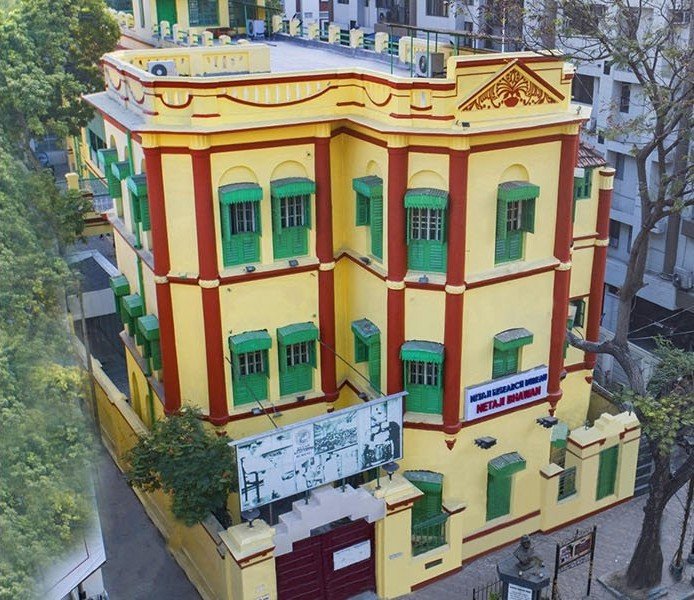
In 1957, Dr Sisir Bose established the Netaji Research Bureau (NRB) at the historic house on Elgin Road (now Lala Lajpat Rai Sarani), Kolkata, which had been dedicated to the nation in 1946 as ‘Netaji Bhawan’ by Sisir’s father, Sarat Chandra Bose—who had been his younger brother Subhas’s closest confidant and most resolute supporter. Over the next four decades, Sisir Bose built NRB into the only serious centre of research and documentation of Netaji’s life and his struggle for India’s freedom as its Executive Director and General Secretary.
After his death on 30 September 2000, Sumantra’s mother, Krishna Bose, helmed Netaji Research Bureau as Chairperson for twenty years, until her own death on 22 February 2020. Today, Netaji Bhawan contains a state-of-the-art, world-class museum of Netaji’s life—established by Dr Sisir Bose in 1961. The Netaji Museum attracts hundreds of thousands of visitors every year from across India and the world, and Netaji Research Bureau is an internationally renowned centre of programmes and activities related to Netaji and India’s freedom struggle, as well as on India’s contemporary issues and problems. It embodies the preservation of national heritage and the propagation of historical legacy.

Krishna Bose (1930-2020), Sumantra’s mother, grew up in Calcutta but was of East Bengal (present-day Bangladesh) family origins. Krishna’s father’s family were from the Mymensingh/Kishoreganj area, and her mother’s family were from Dhaka and Narsingdi, northeast of Dhaka, where her maternal grandfather was a landowner, philanthropist and freedom fighter.
After obtaining an MA in English literature from Calcutta University and starting her working life as a lecturer at Calcutta’s City College (South) for women, Krishna Chaudhuri married Sisir Kumar Bose in December 1955. She became Head of Department of English and then served as the College’s Principal from 1983 to 1991. Krishna became renowned as a researcher in her own right on Netaji’s life and his struggle for India’s freedom, and published seminal books and articles on that topic (mostly in Bengali).

Upon her retirement from academic life at the end of 1995, Krishna Bose joined politics and was elected as Member of Parliament from the Jadavpur constituency of Greater Kolkata three consecutive times—in 1996, 1998 and 1999.
She is remembered as an outstanding parliamentarian. From end-1999 to mid-2004, she was the chairperson of the parliamentary standing committee on external (foreign) affairs, which oversees India’s foreign policy, a role she discharged with great energy and distinction.

In addition to his professional responsibilities and activities, Sumantra Bose has since 2020 been the Executive Director and General Secretary of the Netaji Research Bureau at Netaji Bhawan, 38/2 Lala Lajpat Rai Sarani, Kolkata, India.