
Publications
Sumantra Bose is a globally known political scientist who works on the intersections of nationalism, democracy and conflict in the Indian subcontinent, the Balkans region of Europe, and the Middle East. He is a prolific author and active media commentator.
- Home
- /
- Publications


Kashmir at the Crossroads: Inside a 21st -Century Conflict (Yale University Press, 2021).
An authoritative, fresh, and vividly written account of the Kashmir conflict – from 1947 to the present.
The India–Pakistan dispute over Kashmir is one of the world’s most incendiary conflicts. In decades of
confrontation, at least 60,000 people have been killed – insurgents, civilians, and military and police personnel. In
2019, the dispute entered a dangerous new phase. India’s Hindu nationalist government, under Narendra Modi,
repealed Indian-administered Jammu and Kashmir’s autonomous status and divided it into two territories subject to New Delhi’s direct rule. The
drastic move was accompanied by mass arrests and lengthy suspension of mobile and internet services.
In this definitive account, Sumantra Bose examines the conflict in Kashmir from its origins to the present volatile juncture. He explores the global context of the current situation, including China’s growing role, as well as the human tragedy of the people caught in the bitter dispute. Drawing on three decades of field experience in Kashmir, Bose asks whether a compromise settlement is still possible, given the ascendancy of Hindu nationalism in India and the complex geopolitical context.
In this definitive account, Sumantra Bose examines the conflict in Kashmir from its origins to the present volatile juncture. He explores the global context of the current situation, including China’s growing role, as well as the human tragedy of the people caught in the bitter dispute. Drawing on three decades of field experience in Kashmir, Bose asks whether a compromise settlement is still possible, given the ascendancy of Hindu nationalism in India and the complex geopolitical context.
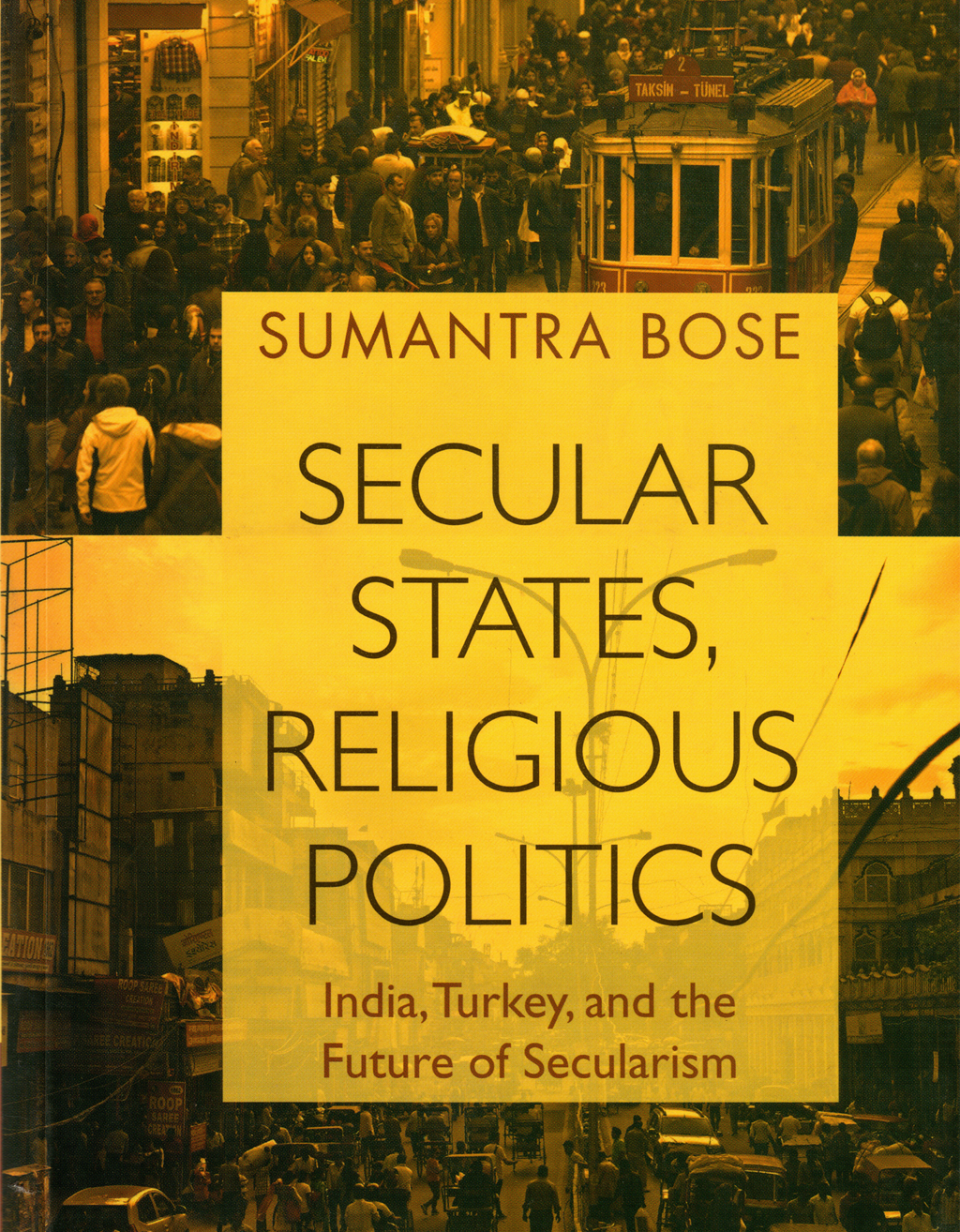
Secular States, Religious Politics: India, Turkey, and the Future of Secularism (Cambridge University Press, 2018).
A comparative study of the rise, evolution and decline of secularism as a core principle of the state in its two major non-Western contexts—India and Turkey. 380pp.

Transforming India: Challenges to the World’s Largest Democracy (Harvard University Press, 2013).
A study of the evolution of India’s democracy over time and of its principal challenges in the early twenty-first century. Also published in an India/South Asia edition by Pan Macmillan India, under the Picador imprint. 337pp.

Contested Lands: Israel-Palestine, Kashmir, Bosnia, Cyprus, and Sri Lanka (Harvard University Press, 2007).
A comparative study of ethno-national conflict and peace processes in five hotspots. Also published in an India/South Asia edition by HarperCollins India, and in Arabic translation (2008) by Arab Scientific Publishers, Beirut. 329pp. Published as a Harvard University Press paperback in 2010.

Kashmir: Roots of Conflict, Paths to Peace (Harvard University Press, 2003).
The most-cited and best-known book on the Kashmir conflict to have appeared in the past few decades. Also published in an India/South Asia edition by Sage Publications India. 307pp. Published as a Harvard University Press paperback in 2005.

Bosnia after Dayton: Nationalist Partition and International Intervention (Oxford University Press, 2002).
A study of post-war Bosnia & Hercegovina, this book is regarded as a major contribution to the literature on peace-building and international intervention in war-torn, deeply divided societies, and to scholarship of the Balkans and the former Yugoslavia. 295pp.
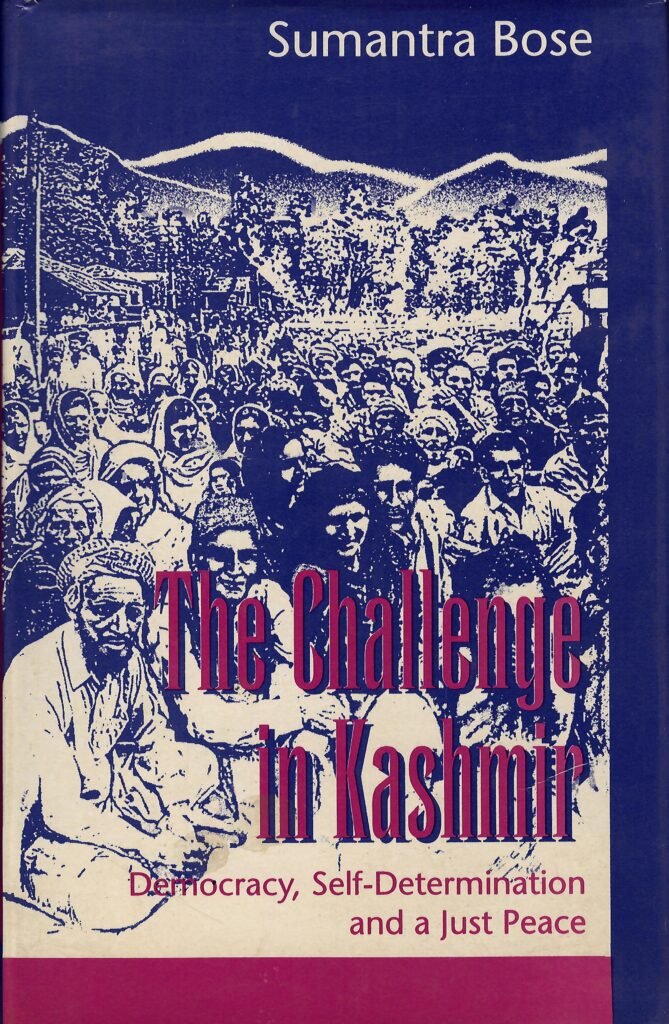
The Challenge in Kashmir: Democracy, Self-Determination and a Just Peace (Sage Publications, 1997).
A first book on the Kashmir conflict which won significant recognition for its deep fieldwork and its comparative insights. 211pp.

States, Nations, Sovereignty: Sri Lanka, India and the Tamil Eelam Movement (Sage Publications, 1994).
This book studied the causation of civil war in Sri Lanka in a comparative politics framework. It won attention and praise for its fieldwork-based analysis and the clarity of its arguments. 236pp.

Sisir Kumar Bose, Subhas and Sarat: An Intimate Memoir of the Bose Brothers (Delhi: Aleph Book Company, 2016).
Edited and with an introduction by Sumantra Bose, this book is the most authentic first-hand account of the Bose family of Bengal and India, and the roles of Netaji Subhas Chandra Bose
and Sarat Chandra Bose (Sisir’s uncle and father), as well as Sisir’s own role, in the struggle for India’s freedom. It is simultaneously a personal memoir and a riveting political history. Sisir Bose’s memoir was first published as a bestselling Bengali book, Bosu-Bari, in 1985. Sisir Bose had drafted the English version prior to his death in autumn 2000, but it was not published until 2016. Illustrated with 64 photographs and documents from the archives of Netaji Research Bureau, Kolkata. 278pp.

Krishna Bose, Lost Addresses: A Memoir of India, 1934-1955 (Delhi: Niyogi Books, 2015).
Translated from the Bengali original, Harano Thikana (Ananda Publishers, Kolkata, 2013) by Sumantra Bose, this book is a fascinating, beautifully written memoir of Krishna Bose’s childhood, adolescence and young adulthood during the final phase of the British Raj and the early years of independent India. It is at once a personal memoir, family history and a valuable record of tumultuous times. This autobiography of Krishna Bose’s early life is illustrated with about fifty photographs from family albums. 204pp.

Krishna Bose, Prabandha-Sangraha, 1951-2020 (Kolkata: Ananda Publishers, 2021, in Bengali).
Compiled and edited by Sumantra Bose, this is an omnibus collection of over one hundred articles and essays published by Krishna Bose over seventy years as a writer, from 1951 to 2020. It is organised in seven sections to reflect the diversity and stunning range of Krishna Bose’s writings, ranging from Netaji and the struggle for India’s freedom to art, culture and literature and the social and political problems of 21st-century West Bengal and India. Most of the articles were published in Bengali by Krishna Bose, and a small number of her English articles have been included in Bengali translation, done by Sumantra Bose. 550pp.

Krishna Bose, Netaji: Subhas Chandra Bose's Life, Politics & Struggle (Delhi: Picador India, 2022).
A priceless collection of Krishna Bose’s seminal writings on Netaji’s life and his struggle for India’s freedom. Consisting of eighteen articles, most of which were published and previously available only in Bengali, the book traverses Netaji’s life from childhood to his mortal end in August 1945. Krishna Bose (1930-2020) was intimately acquainted with both the key people and the important places in Netaji’s life, and this book vividly reveals Subhas Chandra Bose the human being as well as the legendary freedom fighter. In her eminently readable story-telling style, Krishna Bose provides striking insights into Netaji’s personal relationships, political motivations, and the epic journeys and daring military campaigns he undertook to secure India’s freedom. This prime selection of Krishna Bose’s lifetime of work on Netaji has been compiled, edited and translated (from Bengali) by her son Sumantra Bose. Published in August 2022 to coincide with the 75th anniversary of Indian independence, it is a nationwide bestseller in India. Published in a Picador India paperback in 2023 and in a Marathi edition the same year.